
AI has been renamed to Super Intelligence (SI), but is it really qualified?
Recently, a fairly lively discussion has emerged in the AI community about whether AI should be given a new name.
Recently, a fairly lively discussion has emerged in the AI community about whether AI should be given a new name.
The cause was that some people felt the word 'Artificial' in the full name of AI carried a connotation of being man-made and unreal, sounding like a fake, and did not match the capabilities that this technology was demonstrating. So, they suggested renaming it to 'Super Intelligence,' abbreviated as SI. This proposal quickly spread in the industry, and discussions exploded; even some leading tech companies followed suit by changing the AI in their business to SI.
Actually, this is not the first time someone has wanted to rename AI.
Over the past year, the debate over what AI should actually be called has never stopped. Some people, from a linguistic perspective, say that the term AI is too dry and lacks cultural depth, and that it should have a more striking name. Others, from a philosophical perspective, say that the current name seems like a conclusion already reached, preemptively judging that this thing is merely artificial and has no inherent life, and therefore suggest calling it Silicon Intelligence, a name not starting with a judgment. Some are even more radical, saying it might as well not be called intelligence at all, because it is still far from true intelligence.
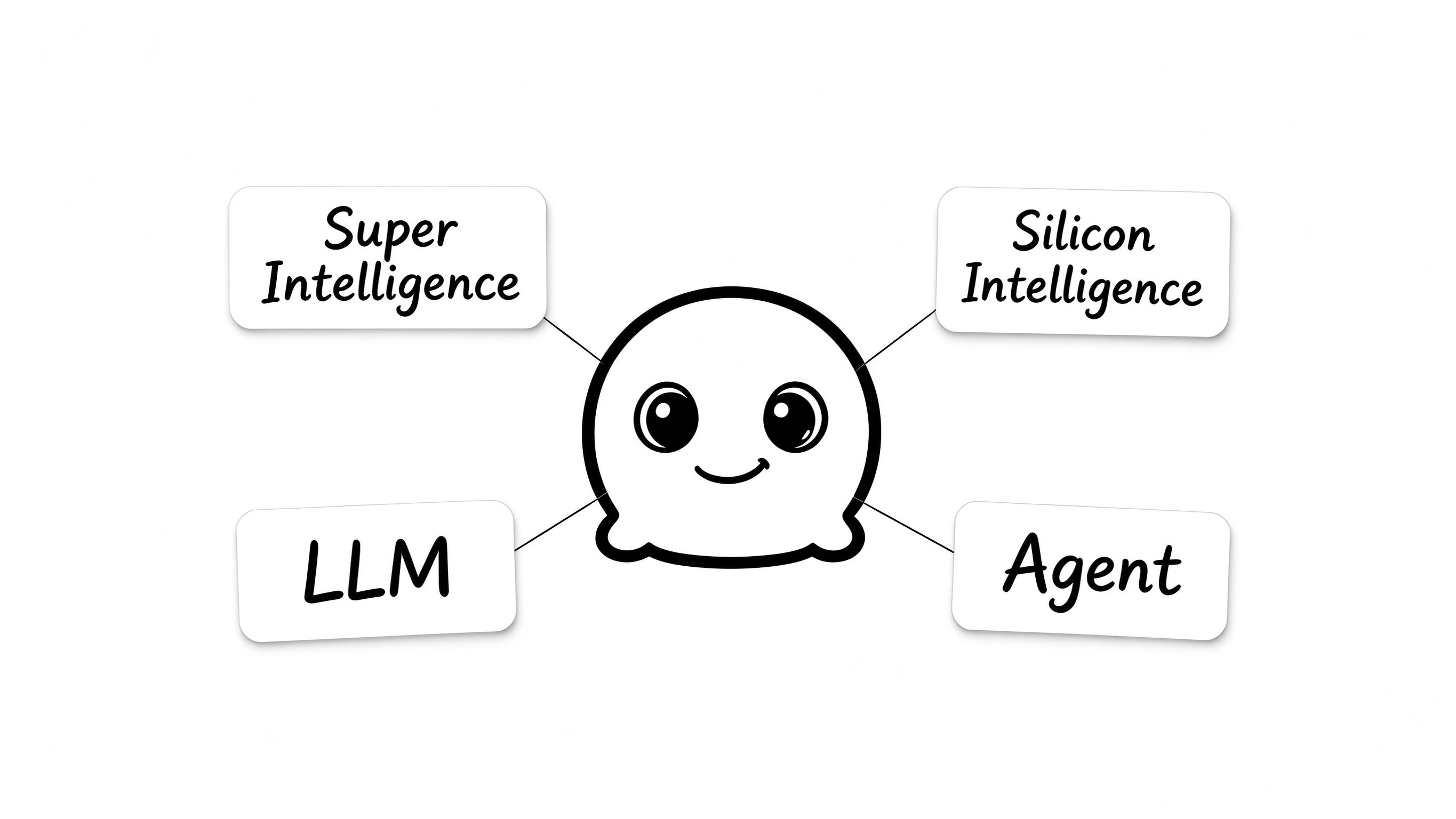
The names are diverse and competing with each other, but in fact, they are all fighting over the same thing: whether AI has truly surpassed humans.
My view is, not yet.
Saying this will definitely make some people disagree, after all, the large models in the past two years have been incredibly powerful; writing articles, drawing, translating, coding—many things are done faster than humans and better than most ordinary people, and productivity has truly been boosted, which I do not deny. But to say that it has reached the level of superintelligence, I think it's still far from it.
Academically, superintelligence is a very strict concept, referring to intelligence that comprehensively surpasses humans across a wide range of cognitive abilities. By this standard, today's large models at most count as highly developed draft machines; they excel at producing things quickly and well on specific tasks, but they have no judgment of their own and no aesthetic sense. If you ask them whether something is good, they will only go along with what you say and give you an answer that sounds quite reasonable.
So I have always felt that, no matter what AI will be called in the future—artificial intelligence, superintelligence, large models, or intelligent agents—its strength will always be improving efficiency, helping people do things faster and with less effort, while its shortcoming will always be that it is ultimately not human, has no own judgment, and no true sense of aesthetics.
This is also why I insist that truly reliable AI products should make 'human intervention' a core feature, rather than an optional patch.
AI is responsible for efficiency and producing the first draft, while humans are responsible for thinking, aesthetics, and calibration, ultimately refining AI's beautiful but soulless draft into a truly usable work. Changing the name cannot alter this division of labor; what really requires thoughtful consideration is who is responsible for which part between humans and machines.
I especially deeply experienced this process in the products I made myself.
I am developing a tool for video original sound translation and dubbing, called SoulDub AI,
At the same time, an Skill was open-sourced, which identifies the human voice in videos, translates it into another language, and then synthesizes the dubbing.
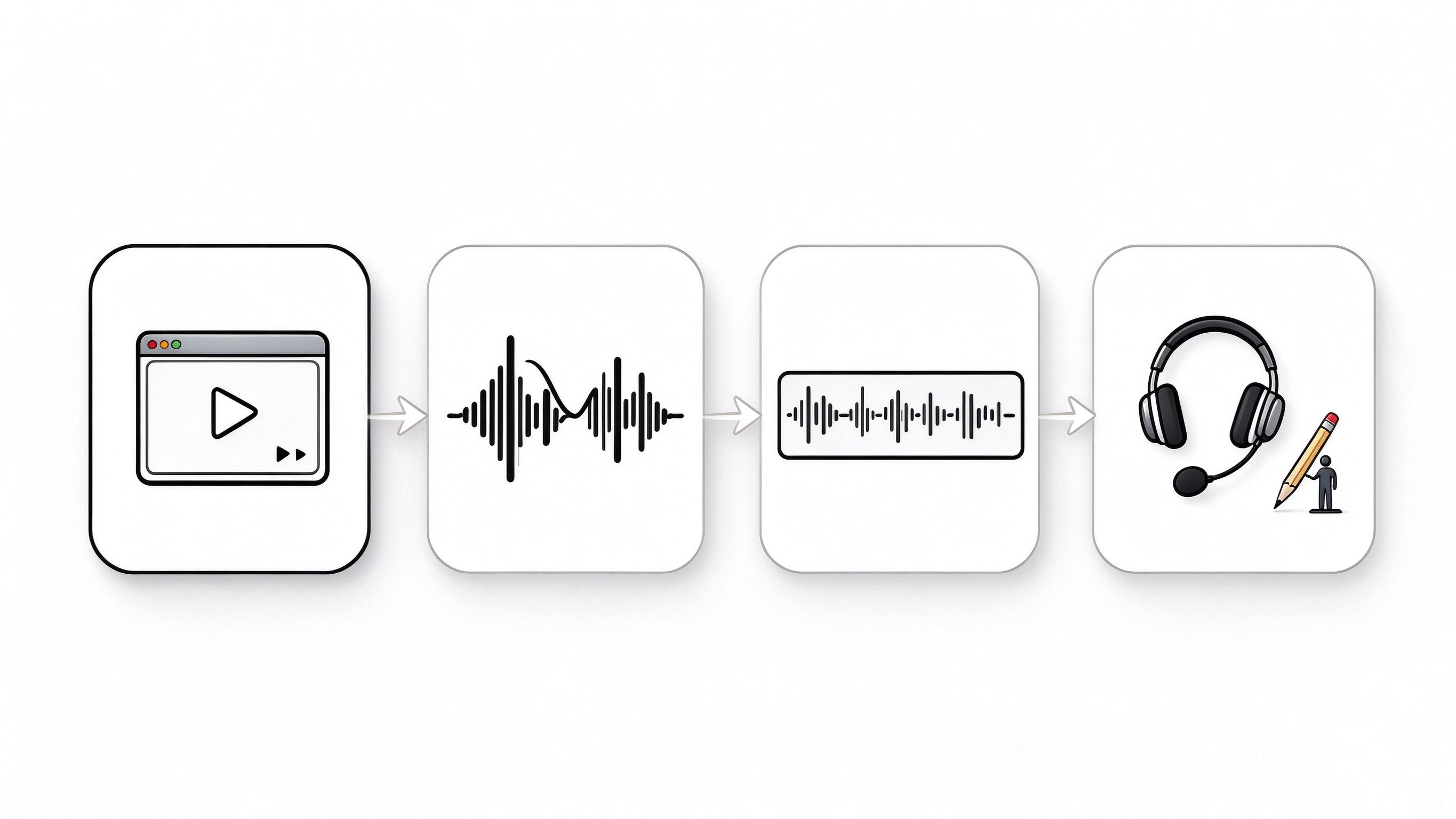
You asked if AI can do this job. It can—recognition, translation, dubbing, the whole set—it can automatically give you a version.
But the problem lies in the word 'automatic.'
Sentences translated by machines have no grammatical errors and the meaning is correct, but no matter how advanced an AI is, it can never match humans in understanding cultural context and proper nouns. A dry joke, if translated literally, will not make the audience laugh at all.
If you have high standards for video translation, this is where human review matters: checking each translated line, adjusting subtitle tone, calibrating the dubbed voice, and making the final work truly usable.
How to Translate Human Voices in YouTube Videos: Get a More Authentic Cross-Language Viewing Experience with Free AI Original Voice Dubbing
The division of labor between humans and machines is most evident here: machines quickly produce the first draft, while humans are responsible for injecting judgment and aesthetics that fit the specific context into these quickly produced outputs.
This is actually what I most want to say in this article: the name can be changed arbitrarily, but human-machine division of labor and collaboration is always necessary.
Think carefully, now any AI product that is convenient to use should leave an extra step for human calibration: allow humans to partially modify when writing articles, allow humans to partially modify when drawing, and translations should also allow human modifications. It's not that AI is incapable; this is exactly how it should be used.
So back to the question in the title, should AI be renamed to Super Intelligence (SI)?
This issue might be somewhat important for those who need to have a say in AI discourse, but for ordinary individuals, the name really isn’t that important. Whether it’s called superintelligence or artificial intelligence, a name doesn’t change what the machine can or cannot do, because whatever it’s called, over time, it will become a habitual term. What really matters is how we interact with it, whether we treat it as a machine that produces results at the press of a button, or whether we always adhere to the principle of 'allowing my own thinking to be included.'
Ultimately, this world is gradually constructed by humans in the process of interacting with it. If one day, humans only interact with AI, and AI interacts with the world, then what is the meaning of humans, and where should humans go?
So, even if someday superintelligence really appears, I hope it is we who are in control, not the machines leading us. We should firmly hold the right to interact with the world in human hands; always require human intervention, injecting human thought so that people can make fine adjustments and corrections. This is not a matter of inconvenience; in the present and future of rapidly developing AI, it is the things that we, as humans, can ultimately leave behind, the things that are precious.
This is also the principle I hold when doing souldub.
If you have a video that you want to translate into different languages and want to give it a try, the entry point is here:
Try translating the video sound
Try Video Sound Translation Skill
Video audio translation, three steps in total: upload the video, select the target language, start translating.
Before exporting the final video, manual adjustment of subtitles and dubbing is also allowed.
By
Karl Voss(卡尔·沃斯)
Souldub product manager, long-term focus on the value of humans in the AI era, the ways humans collaborate with AI, and AI product experience.


