
Multilingual Foreign Trade Video Translation: Even with poor spoken skills, you can introduce your products to more countries
Foreign trade practitioners do not need to practice many languages first in order to create product videos for overseas markets. This article introduces how to use SoulDub to complete video translation, subtitle modification, voiceover regeneration, and pre-release proofreading.
When doing foreign trade, many people have had similar experiences: the product itself is very competitive, and a promotional video has been made, but when it comes to actually sending it to different countries, it gets stuck on the language.
Spoken English is not natural enough, and I can't speak the languages of other countries at all; to introduce a product, I can only use a few simple words or short phrases in a video. Such content might allow people familiar with the industry to guess the general meaning, but it is very difficult to fully explain the product's features, the problems it solves, and which customers it is suitable for.
What's even more troublesome is that if a video needs to target multiple markets such as English, Spanish, Arabic, and Thai, it requires repeatedly finding people to translate, record, edit, and proofread. For foreign trade teams and individual sellers, this sounds complicated and it is also difficult to maintain a stable release schedule.
The answer is not necessarily to learn all the languages first, but to first establish a multilingual video workflow that is easier to check and modify.

Why is it that just saying a few words is often not enough to introduce a product?
A product introduction video is not completed just by stringing keywords together. Customers usually also need to understand several types of information:
- What the product is and what usage scenarios it is suitable for;
- What problems can it solve, and how is it different from ordinary products;
- What are the specifications, materials, functions, and delivery methods?
- The next step should be to consult, request samples, or place an order directly.
If a video only contains short phrases like "high quality," "good price," and "welcome to contact us," the language may not have obvious errors, but the information density and persuasiveness remain limited. Customers from different countries may also be accustomed to different expression orders and communication tones, and directly translating Chinese or incomplete English sentence by sentence can easily become awkward, and even cause ambiguities in the product's selling points.
So, the focus of multilingual foreign trade Video translation is not just 'changing the voice into another language,' but ensuring that customers in the target market can understand the product more smoothly.
Not knowing multiple languages, how can one promote videos in more countries?
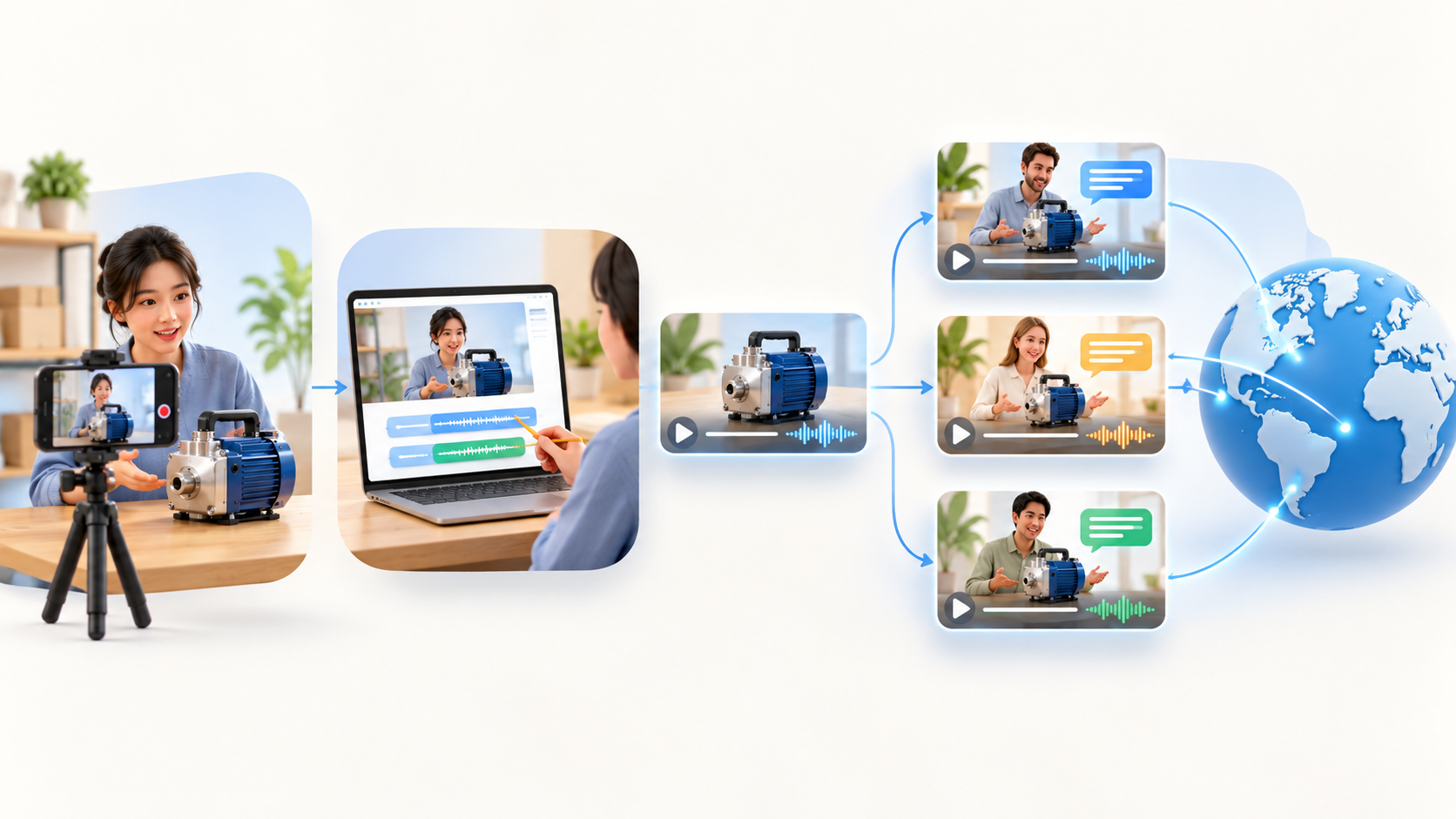
A more practical approach is to retain an original product video that is complete in content and clear in visuals, and then use tools to generate versions in different languages. This way, there is no need to shoot for each market again, nor do salespeople need to master multiple languages at once.
When using SoulDub, you can start with existing product introductions, factory showcases, tutorial videos, or customer case videos, and create them according to the following steps:
- Upload the original video and confirm that the audio and visuals are clear;
- Select the source language and target language, create Video translation task;
- Wait for the system to complete speech recognition, subtitle translation, and target language dubbing;
- Check the translation in the subtitle editing area and modify product names, models, specifications, and calls to action;
- Regenerate the dubbing for the modified segments and listen to the tone and rhythm;
- Preview and export videos suitable for release in the target market.
The value of this process lies in the fact that a single original video can serve as the content base: first, an English version is produced, and then versions in Spanish, Arabic, Thai, etc., are created according to market priorities. Each version can be checked before release, rather than only being able to accept an unmodifiable result after generation.
What should I do if the translated video is inaccurate?
No automatic translation should be regarded as a final version that requires no checking, especially for foreign trade product videos. Brand names, product models, material names, dimensions, Price, certifications, and delivery commitments—getting even one word wrong could affect the customer's understanding.
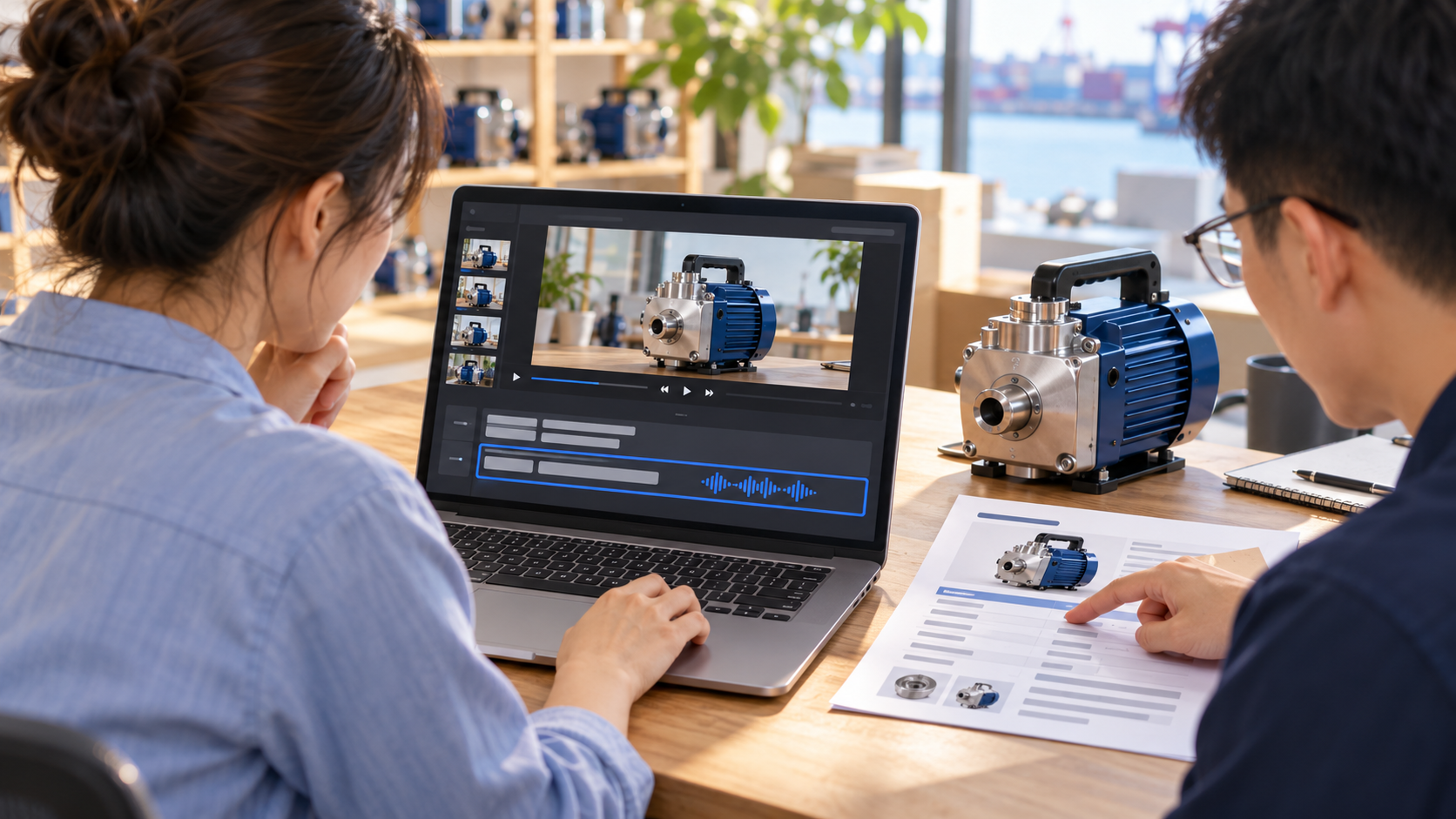
A more reliable approach is to treat AI generation as the first draft, and then use an editable subtitle workflow for manual verification. It is recommended to prioritize checking:
1. Product and Technical Information
Check the product name, specifications, unit, numbers, model, function switches, and technical terms. When it involves voltage, dimensions, capacity, temperature, quantity, or delivery time, do not rely solely on intuition.
2. Tone and Sales Expressions
The same sentence may have multiple translations. Product descriptions need to be clear and trustworthy, but should not add content that is not promised in the original text just to 'sound like an advertisement.' If necessary, the translation can be adjusted to better match the everyday expressions of the target market.
3. Are the subtitles consistent with the visuals?
If the subtitles mention a button, accessory, or operation step, it is necessary to ensure that the corresponding content still appears on screen. Subtitles that are too long, poorly punctuated, or displayed for too short a time will also make it difficult for viewers to understand.
4. Does the dubbing need to be regenerated?
If the translation is modified, the target language voice-over should be regenerated for the affected segments, and the transition before and after the modification should be reviewed. Only changing the subtitles without updating the audio may result in inconsistencies between the subtitles and the spoken content.
How SoulDub Reduces the Operating Costs of Promoting Foreign Trade Videos
For foreign trade practitioners, the time-consuming part is often not clicking "translate," but finding people, sending files, explaining the context, repeatedly confirming, and re-editing. The workflow of SoulDub mainly reduces repetitive operations in several stages:
- Subtitles can be modified: If the translation is not appropriate, it can be directly adjusted on the workspace, rather than remaking the entire video;
- Supports segment-level processing: Only regenerate the dubbing for sentences or segments that need correction, making it easier to control the scope of modifications;
- Check subtitles and dubbing together: After modifications, you can listen and preview them, reducing the chances of discovering issues only after exporting;
- Suitable for Multi-Market Reuse: The same product material can generate versions for each target country while maintaining consistent visuals and product information;
- Manual Confirmation Before Release: The foreign trade team can have someone familiar with the business do a final check on key terms, parameters, and calls to action.
If the team already has an established video processing workflow, you can also further explore Video Translation API or Video Audio Translation Skill, connecting batch processing with the internal content system.
A more reliable multilingual promotion method
It is not recommended to translate all videos into dozens of languages from the start. You can first choose one or two priority countries for testing based on inquiries, traffic, trade show clients, and target markets:
- Choose a product video that is complete in information and relatively short in length.
- First, create a version in the target language;
- Find colleagues, clients, or partners who are familiar with this market to check key translations;
- Modify subtitles and dubbing based on feedback;
- Publish on the official website, social media, email, or sales communications;
- Observe the completion rate of views, the number of inquiries, and the number of valid inquiries, then decide whether to expand to more languages.
The advantage of doing this is that it is not necessary to invest a large amount of translation and editing costs before validating the demand, and it also allows for gradually accumulating product expressions suitable for different markets.
Frequently Asked Questions
If my spoken language is not good, can I directly make foreign language product videos?
Sure. You can first fully introduce the product in Chinese or the language you are most familiar with, and then use SoulDub to generate subtitles and dubbing in the target language. It is recommended to check brand names, specifications, commitments, and industry terms before publishing, and have someone familiar with the target market review it if necessary.
Is it possible to only translate the subtitles without generating foreign language dubbing?
Yes, it is suitable for scenarios where the audience is willing to read subtitles. However, product introductions, advertisements, and sales videos usually require a more natural viewing experience. When subtitles are combined with voiceover in the target language, customers do not have to keep switching between the visuals and the text.
After the translation is completed, if a certain sentence is found to be inaccurate, does the entire video need to be redone?
Not necessarily. First, modify the corresponding subtitles, then regenerate the dubbing for the affected segments, and listen and preview the latest finished video. The specific editable range and processing options are subject to what is displayed on the current task page.
Can SoulDub guarantee completely accurate translations?
No automated translation can replace the confirmation of key content by business personnel. SoulDub provides editable subtitles, clip dubbing regeneration, and preview capabilities to help you more easily identify and correct issues; when it comes to specifications, pricing, compliance, and contractual commitments, manual review is still required.
Conclusion: First let the content go out, then gradually improve each market
The difficulty in promoting foreign trade videos often lies not in the lack of products, but in the fact that product information is not fully expressed in language familiar to customers. Not having standard spoken language does not mean you can only stick to a few simple words; not knowing multiple languages does not mean that a new video has to be shot from scratch for every market.
Start with a short product video, first complete the translation, then check the subtitles, correct expressions, regenerate the necessary voiceover adjustments, and finally release it to the priority markets. In this way, foreign trade practitioners can promote existing product content to more countries using more controllable and convenient steps.
By
Sugar Vale(舒格·维尔)
Souldub content experience consultant, long-term focus on video localization, AI dubbing, and cross-language content growth.


